
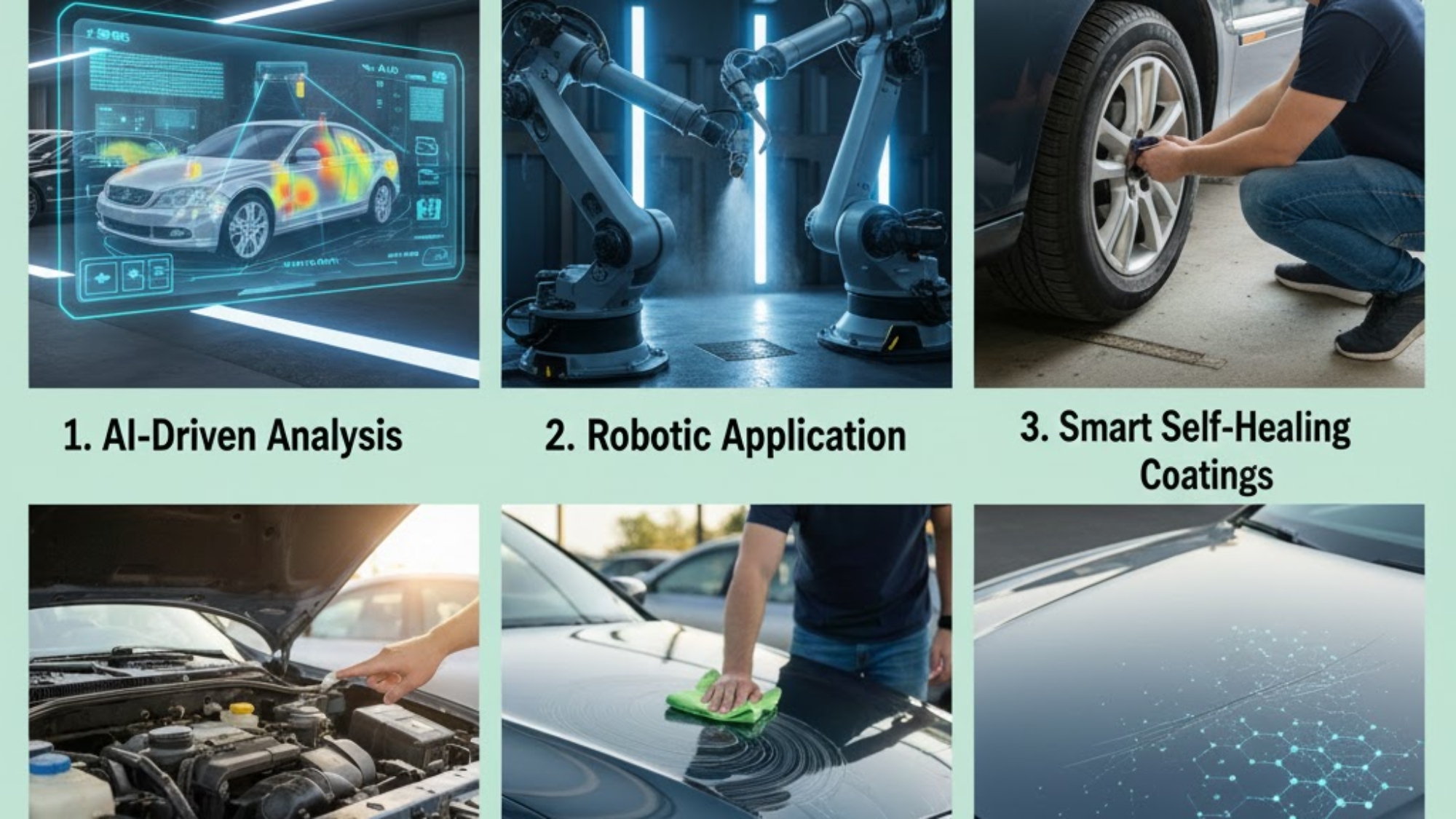
Car detailing is no longer just foam washes, polishing pads, and hand-applied wax. The industry is entering a new era — a smarter, faster, more precise era powered by AI, robotics, and intelligent surface technologies. As vehicles become more advanced, the detailing industry is evolving to match this shift.
Here’s what the future of car care looks like — and why 2026–2030 will redefine the detailing world forever.
1. AI Diagnosing Paint & Interior Condition
Imagine scanning a car with a handheld device, and within seconds, an AI system tells you:
- Exact paint defects
- Swirl count and depth
- Oxidation level
- Water spot history
- Hardness of the clear coat
- Interior fabric condition
- Best products and techniques to fix each area
This isn’t science fiction — AI-powered scanners are already entering premium studios. Over the next few years, they will become standard tools in every professional detailing setup.
Why it matters:
AI eliminates guesswork. It ensures faster, more accurate detailing with zero risk of wrong products or techniques.
2. Robotics Replacing Labor-Intensive Tasks
Robotic assistance is the next big revolution.
Robotic applications in detailing:
✔ Precision polishing arms
✔ AI-guided washing machines
✔ Robot-controlled steam cleaners
✔ Automated interior vacuum systems
✔ Sensor-driven wheel and underbody washers
These robots deliver perfect consistency, something human hands can’t always guarantee.
Benefits:
- Scratch-free washing
- Precise pressure control
- Faster turnaround
- Reduced labor cost
- 24/7 operation in large detailing centers
Robots will handle the repetitive tasks, while human detailers focus on skill-based corrections.
3. Smart Coatings That Heal, Adapt & Protect
The biggest breakthrough is happening in the coating industry.
Next-gen coatings coming by 2030 include:
Self-healing graphene coatings
Repair minor swirls and scratches using heat or sunlight.
Hydrophobic coatings with memory
They adapt based on climate — more hydrophobic in monsoon, more heat-reflective in summer.
Dust-repellent nano-coatings
Reduce dust attachment by 60–80% on Indian roads.
Anti-bird-dropping coatings
Chemical-resistant layers that stop etching within seconds.
Electrostatic-protection coatings
Useful for EVs, preventing microstatic charge buildup on panels.
These smart coatings will last 5–10 years, making traditional waxing nearly obsolete.
4. Digitized Car History & Smart Maintenance Tracking
Car detailing will integrate into the digital ecosystem of the vehicle.
Soon you’ll see:
- QR-coded coating certificates
- Apps showing coating health
- AI reminders for maintenance
- Digital gloss and paint readings
- Cloud-stored detailing history
Buyers of used cars will check a digital detailing report the same way they check service history.
This increases trust, resale value, and transparency.
5. Virtual Reality (VR) Training for Detailers
The skill gap in the detailing industry will shrink with VR-powered training.
Trainees will practice:
- Polishing
- Coating
- Interior cleaning
- Leather restoration
- PPF installation
In a virtual 3D environment before touching a real car.
This creates better technicians, fewer mistakes, and higher consistency across studios.
6. EV-Specific Detailing Technologies
Electric cars bring new challenges:
- Softer eco-friendly paints
- More sensors
- Aluminum/composite panels
- Weather-sensitive batteries
Future detailing systems will include:
- Low-heat polishing robots
- Sensor-safe cleaning protocols
- AI-based battery-area protection
- EV-specific coatings that reduce heat absorption
The rise of EVs will make detailing more tech-driven than ever.
7. Waterless & Eco-Friendly Innovations
With increasing water shortages, the future is eco-detailing.
Expect:
- High-lubricity waterless wash products
- Steam-only washing centers
- Zero-waste detailing
- Biodegradable coatings
- Solar-powered detailing equipment
This reduces environmental impact while maintaining premium results.
8. Smart PPF With Color-Changing & Damage Sensors
Paint Protection Films of the future may include:
- Color-shifting properties
- Built-in damage or impact sensors
- Heat-adaptive thickness
- Self-healing at room temperature
Your PPF will notify you when it needs maintenance — just like your smartphone.

Add a Comment
You must be logged in to post a comment