
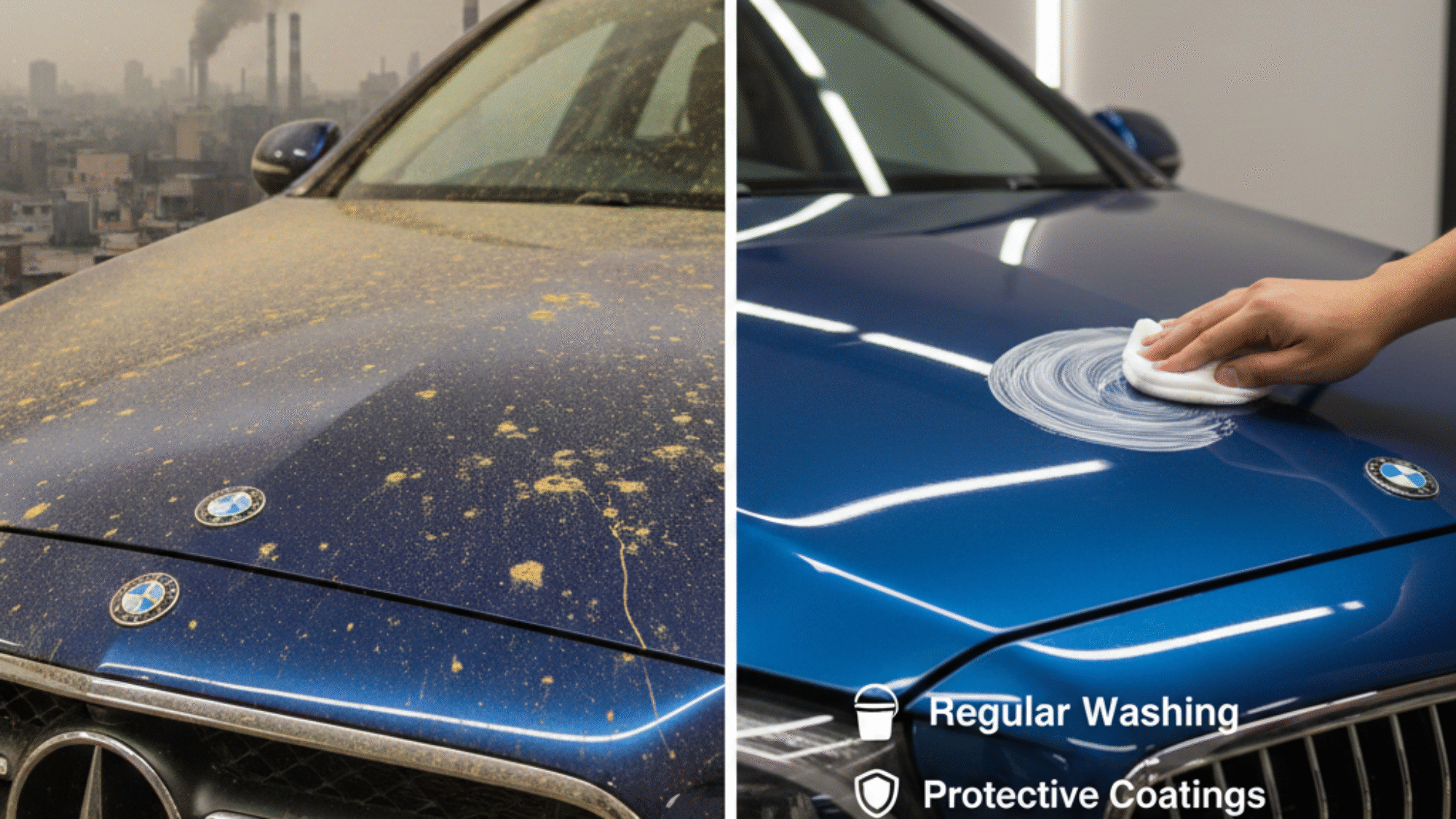
India’s cities are growing fast — and so is the pollution that silently eats away at your car’s paint. From Pune to Delhi, Mumbai to Bangalore, millions of car owners are losing gloss, shine, and resale value every single day without even realizing what’s attacking their vehicle.
This isn’t just “dust” or “dirt.”
The kind of pollution we see today is more toxic, acidic, and abrasive than ever before — and it is actively damaging your car’s paintwork.
Let’s break it down.
1. Acidic Air Pollution: The Invisible Paint Killer
Industries, diesel vehicles, construction sites, and factories release heavy pollutants like sulphur dioxide, nitrogen oxides, and acidic particles. When these settle on your car and mix with humidity or morning dew, they create a thin acidic layer.
What this causes:
- Fading paint
- Dull and oxidized surface
- Permanent paint etching
- Patchy, uneven shine
Even if your car is parked for long hours — especially in open spaces — this chemical attack continues daily.
2. Dust That Works Like Sandpaper
Indian cities have extremely high levels of micro-dust due to construction work, broken roads, and dry climates.
These dust particles contain:
- Silica
- Cement
- Metal fragments
When they settle on your car, they scratch your clear coat every time you wipe or wash the vehicle.
Result?
- Swirl marks
- Micro scratches
- Loss of gloss
- Rough paint surface
Most car owners unknowingly create thousands of scratches weekly just by dry-wiping their car.
3. Bird Droppings + Pollution = Double Damage
Bird droppings are already highly acidic.
But in polluted cities, the acidity increases even further because pollutants mix with the droppings.
This causes:
- Deep etching
- Permanent marks
- Clear coat burn
- Yellow patches
If left for even a few hours in hot sun, it can damage clear coat beyond repair.
4. Hard Water + Pollution = Stubborn Water Spots
Most Indian car washes and homes use hard water.
When that water dries, minerals remain on the surface.
Now add pollution and dust → and you get hard, crust-like water spots that ruin your paint.
Left untreated, these spots can:
- Etch deep into paint
- Leave rings and stains
- Become almost impossible to remove without polishing
5. UV Rays Accelerate the Damage
Indian sun + pollution = rapid oxidation.
UV rays break down your car’s clear coat faster when pollutants and acidic layers are already sitting on the surface.
The result:
- Faded paint
- White, chalky surface
- Loss of depth and shine
This is why many cars look 5 years older within just 1–2 years of use.
How to Protect Your Car from Pollution Damage
Here’s what Glossgenic Pune recommends:
1. Graphene Coating — Best for Indian Pollution & Heat
Graphene creates a heat-resistant, anti-dust, anti-chemical barrier that protects your paint from:
- Pollution
- UV rays
- Acidic particles
- Hard water spots
- Oxidation
It keeps the car glossy, smooth, and easy to clean — even in extreme city conditions.
2. Ceramic Coating — Good, But Needs Maintenance
Ceramic coating protects against:
- UV
- Light scratches
- Dust
However, in high-pollution cities, graphene performs better due to superior chemical resistance.
3. PPF (Paint Protection Film) — Maximum defense
If pollution + scratches + stone hits are your main problems, PPF gives:
- Complete protection
- Self-healing surface
- 5–10 year durability
Perfect for cities with heavy traffic and construction zones.
4. Avoid Daily Dry Wiping
Use only:
- Soft microfiber
- Lubricated cleaning spray
- Proper washing techniques
Dry wiping = instant micro-scratches.
5. Regular Decontamination Wash
Pollution leaves iron particles and tar on your car.
A professional decontamination wash removes these chemically without rubbing or scratching.
But with the right protection from Glossgenic Pune — whether it’s graphene, ceramic, or PPF — your car can remain shining, glossy, and protected for the long run.

Add a Comment
You must be logged in to post a comment