
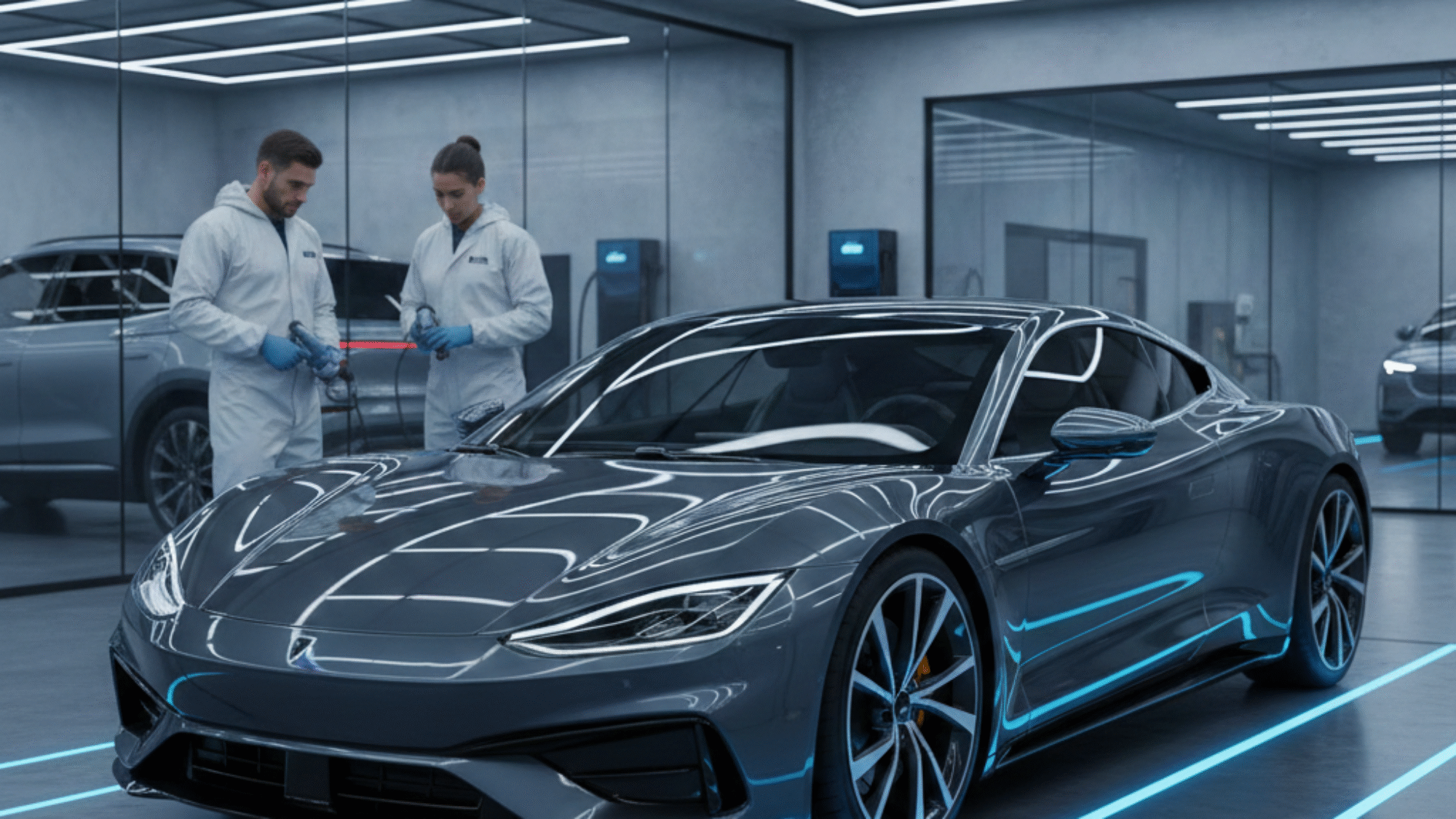
Electric vehicles (EVs) are no longer rare — they are becoming a common sight on Indian roads. From premium models like the Tesla and BMW i-Series to popular choices like the Tata Nexon EV and MG ZS EV, India’s shift toward clean mobility is accelerating fast.
But here’s the part most car owners don’t realize:
EVs require a different approach to detailing.
Not better. Not worse.
Just different — because their build, technology, and materials demand it.
At Glossgenic Pune, we’ve worked on hundreds of EVs, and here’s what makes them special from a detailing perspective.
1. EV Paint Chemistry Is Often Softer
Many electric car manufacturers use lighter, eco-friendly paint to reduce emissions and stay compliant with green manufacturing norms.
This paint:
- Scratches easier
- Oxidizes faster
- Fades quicker under harsh sunlight
This is why graphene coatings, ceramic coatings, and PPF become even more important for EV owners. They protect the softer paint from UV rays, dust, pollution, and wash-induced swirl marks.
2. EV Body Panels Use More Aluminium & Composites
To increase range, EVs use lightweight materials such as:
- Aluminium
- Reinforced polymer panels
- High-strength plastic trims
These materials heat up faster and cool down slower during polishing.
A detailer must:
- Use low-heat polishing techniques
- Choose the right pads and compounds
- Avoid aggressive cutting
This prevents panel warping, micro-marring, and dullness.
3. EVs Have More Sensors — And They Hate Harsh Chemicals
EVs are packed with:
- Parking sensors
- 360° cameras
- Lidar/radar modules
- ADAS systems
Using acid-based cleaners or pressure washers incorrectly can damage these components.
EV-safe detailing requires:
- pH-neutral shampoos
- Gentle sensor-safe rinsing
- Soft microfiber drying
- Controlled water pressure
Every sensor has to remain clean yet untouched by harmful chemicals.
4. The Battery Area Needs Special Attention
The battery compartment and underbody of an EV cannot be treated like a regular car.
High-pressure water under the floor can create:
- Short-circuit risks
- Seal damage
- Moisture buildup
Professional EV detailing includes:
- Low-pressure underbody cleaning
- Careful inspection of battery cooling plates
- Avoiding steam cleaning directly on seals
This preserves both performance and safety.
5. Regenerative Braking Means Dirtier Wheels
EVs use regenerative braking, which produces less brake dust but accumulates more road grime, tar, and mud on alloy wheels.
Detailers must use:
- Dedicated wheel cleaners
- Tar/iron removers
- Soft brushes
This ensures deep cleaning without scratching lighter EV rims.
6. Interiors Are More Tech-Heavy
Electric cars come with:
- Large touchscreens
- Digital dashboards
- Wireless charging pads
- Sensitive electronic consoles
These surfaces require anti-static, alcohol-free cleaning solutions.
Harsh cleaners can cause:
- Screen streaking
- Anti-glare damage
- Touch sensitivity issues
EV interior detailing must be gentle yet effective.
7. EVs Benefit More From Protection Films & Coatings
Because of softer paint and futuristic body materials, EVs gain more value from:
✔ PPF for stone-chip protection
✔ Ceramic coatings for UV and weather resistance
✔ Graphene for heat reduction and hydrophobicity
These extend long-term gloss, efficiency, and resale value.

Add a Comment
You must be logged in to post a comment